
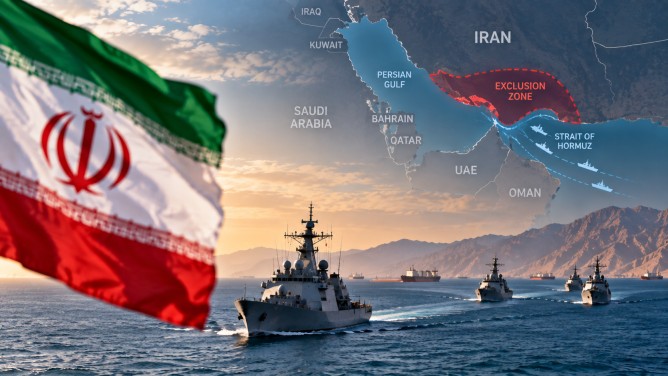
Iran has declared its intention to create an “exclusion zone” around the critical Strait of Hormuz, a move aimed at vessels it suspects of trying to navigate this key maritime passage. Mohsen Rezaei, the newly appointed head of Iran’s Supreme National Security Council, announced that this zone will stretch from the vicinity of a U.S. naval blockade toward the Strait of Hormuz, extending into the Arabian Gulf. Vessels identified as attempting to enter this area for the purpose of crossing the strait could find themselves subjected to Iranian sanctions.
This development comes amid heightened tensions, marked by the United States conducting a strike on three Iranian oil tankers following Iran’s launch of ballistic missiles targeting U.S. warships. Furthermore, Iran claimed it had successfully targeted an unmanned U.S. vessel trying to enter the strait, although the U.S. military has denied this assertion. The Strait of Hormuz is a pivotal corridor for the global transport of oil and gas, and any disruptions here could have significant implications for energy prices and the broader international economy.
In response to the escalating situation, the United States has enhanced its naval presence to enforce a blockade on Iranian ports, aiming to prevent Iran from exporting oil. Washington has also ramped up economic sanctions against Iran in the wake of failed negotiations. Rezaei emphasized that Iran remains open to diplomatic solutions but will demand stronger assurances in any prospective agreements. Dialogue between the U.S. and Iran has reached an impasse, with both parties accusing each other of breaches.
Despite these tensions, U.S. officials report that substantial quantities of oil continue to transit through the Strait of Hormuz, aided by naval escorts and alternative regional pipelines. The ongoing friction has not yet severely curtailed the flow of oil, underscoring the strategic importance of maintaining open passage through this vital waterway.