
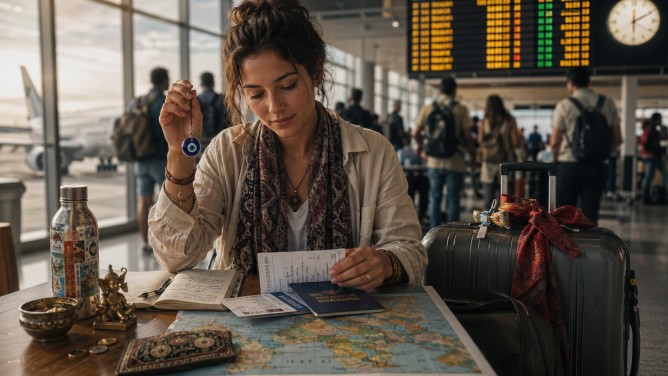
Embarking on a journey often comes with unique rituals and traditions, each adding a touch of magic to the experience. Across the globe, travellers have embraced various superstitions, believing these practices can bring good luck and protection on their travels. These fascinating customs, each rooted in cultural tradition, continue to be observed in different regions, adding a layer of intrigue to the world of travel.
In the Balkans, garlic is more than a culinary staple; it is considered a powerful talisman against negative energy and the evil eye. Some travellers from this region tuck a clove of garlic into their luggage, hoping it will shield them from misfortune. Meanwhile, a popular custom among many travellers involves touching or tapping the outside of an aircraft before boarding. This gesture, believed to bring good luck, serves as a comforting ritual for those who may feel anxious about flying.
The idea of starting a trip “on the right foot” is taken literally by some who step onto a plane with their right foot first, viewing it as a gesture that invites good fortune. In parts of the Middle East and the Balkans, a tradition of throwing or sprinkling water behind a departing traveller symbolizes a wish for a smooth and safe journey, with the hope of their safe return. Numbers also play a significant role in travel superstitions, with certain numbers being avoided due to their unlucky connotations. For instance, the number 13 is shunned in many Western cultures, while in China, the number 4 is avoided due to its phonetic similarity to the word for death. In Italy, the number 17 holds a similar reputation.
In Slavic culture, a brief pause is taken before setting off on a journey, with travellers sitting quietly on their packed luggage. This moment of reflection is believed to mentally prepare them for the trip ahead. Additionally, in several cultures, sweeping the floor immediately after someone leaves is thought to be unlucky, as it may symbolically sweep away the traveller’s good fortune or impact their safe return.
While these superstitions lack scientific evidence, they remain an intriguing aspect of travel culture. For many, these rituals are more about preserving family traditions and cultural identity than about proving their effectiveness. Whether for peace of mind or simply as a cherished custom, these practices continue to be an integral part of the excitement that accompanies the start of a new journey.