
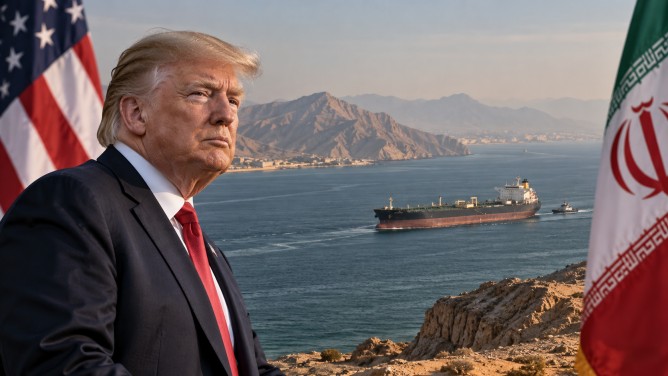
Amid ongoing tensions over the Strait of Hormuz, U.S. President Donald Trump has expressed optimism about the possibility of renewed negotiations with Iran, despite having rejected a recent proposal from Tehran. Trump’s comments come following indirect discussions between the U.S. and Iran, facilitated through intermediaries during the United Nations General Assembly in New York.
The proposal from Iranian Foreign Minister Abbas Araghchi involved a seven-day plan to reopen the crucial maritime passage, the Strait of Hormuz, contingent upon meeting certain conditions. These conditions reportedly included lifting the U.S. naval blockade, easing of sanctions, and the release of frozen Iranian assets. The plan also suggested resuming negotiations on Iran’s nuclear program. This proposal was communicated to the U.S. through Qatar.
However, the U.S. rejected the offer, citing concerns regarding the preconditions set forth by Iran. The U.S. stance reflects Washington’s apprehension about the implications of agreeing to terms it deems unfavorable before engaging in further diplomatic talks.
Despite the rejection of the Iranian proposal, President Trump has indicated that further discussions with Iran are anticipated. These diplomatic efforts are likely to focus on the Strait of Hormuz, sanctions, Iran’s nuclear ambitions, and broader efforts to de-escalate regional tensions.
The Strait of Hormuz is a strategic chokepoint in international energy trade, with its reopening being crucial for global energy markets. Any agreement that restores normal maritime traffic through the strait could have significant implications for regional stability and the international energy landscape.