
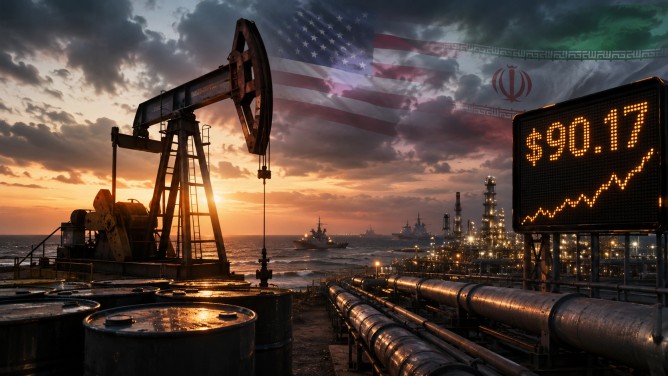
Following the lapse of a two-month negotiation period between the United States and Iran without reaching a peace agreement, oil prices have spiked significantly, heightening concerns that the ongoing conflict could further disrupt global energy supplies. Brent crude prices have surged past $90, reaching approximately $91.63 per barrel, marking the highest level since July 30. The increase comes on the heels of U.S. President Donald Trump’s demands for Iran to surrender, accompanied by warnings of potential escalation if diplomatic measures fail to resolve the tensions.
The situation has also drawn attention to the Strait of Hormuz, an essential maritime corridor for global oil shipments. The number of commercial vessels navigating this vital waterway has notably decreased, raising alarms about a possible prolonged disruption in oil supplies. This development adds to the apprehension surrounding the stability of energy markets, as the strait is a crucial conduit for a significant portion of the world’s oil exports.
Iran has hinted at a potential shift to a more aggressive military posture should negotiations collapse. This stance is underscored by a reported attack on a cargo ship traversing the Strait of Hormuz, which has further intensified fears about the safety of maritime operations in the region. The increasingly volatile environment has prompted investors to brace for an extended period of potential disruption in oil supplies, with any sustained closure or reduced traffic through the strait likely to exert additional upward pressure on crude prices.
Analysts caution that the persistent conflict in the Middle East, compounded by the ongoing war in Ukraine, poses a significant risk of triggering further shocks in global energy markets. This could result in heightened oil and gas prices, as these geopolitical tensions play out against the backdrop of an already strained energy landscape. The intertwined nature of these conflicts underscores the complex challenges facing the global oil market as it grapples with the implications of prolonged instability in key regions.